
| 일 | 월 | 화 | 수 | 목 | 금 | 토 |
|---|---|---|---|---|---|---|
| 1 | 2 | 3 | 4 | |||
| 5 | 6 | 7 | 8 | 9 | 10 | 11 |
| 12 | 13 | 14 | 15 | 16 | 17 | 18 |
| 19 | 20 | 21 | 22 | 23 | 24 | 25 |
| 26 | 27 | 28 | 29 | 30 | 31 |
- leetcode
- 14일 공부
- docker
- Til
- AWS
- study
- 경로 계획 알고리즘
- 생성 패턴
- AWS 비용 절감
- DevOps
- 지표
- 청첩장 모임
- 디자인 패턴
- Rust
- 실용주의 프로그래머
- 논문 정리
- 오블완
- Playwright
- Go-lang
- 구조 패턴
- 회고
- 토스
- github
- 티스토리챌린지
- MAPF
- terraform
- amazon ecs
- 커머스
- ssh
- PostgreSQL
- Today
- Total
밤 늦게까지 여는 카페
[leetcode] 1905. Count Sub Islands 풀이 본문
안녕하세요. 오늘은 leetcode에서 1905. Count Sub Islands 문제를 풀어봤습니다.
1. 문제
이 문제에서는 크기가 같은 grid1, grid2, 2개의 grid가 주어지고, grid2에 있는 island 중 grid1에 있는 island의 sub-island인 island가 몇 개 있는지 찾아야 합니다.
- grid에서 0인 부분은 바다이고 1인 부분은 섬 부분입니다.
grid는 격자 지도인 것을 아실테지만 island가 무엇인지 생소하시겠죠?
문제에서 말하는 island는 다름이 아니라 grid에 있는 connected component를 뜻합니다.
connected component는 단어 그대로 연결되어 있는 vertex들을 의미합니다.
다음 grid에는 connected component가 [1, 4], [3], [8, 9]로 3개 있습니다.
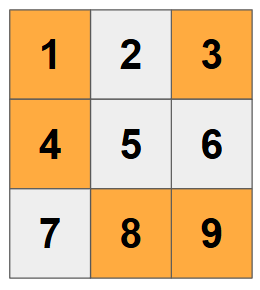
그러면 grid2에 있는 island가 grid1의 island의 sub-island라는 것은 무슨 뜻일까요?
grid2에 있는 island의 모든 좌표가 grid1의 동일한 island에 포함되어 있을 때 sub-island라고 표현합니다.
다음 예시에서는 grid2의 2번과 4번 island만 grid1의 sub-island라고 할 수 있습니다.
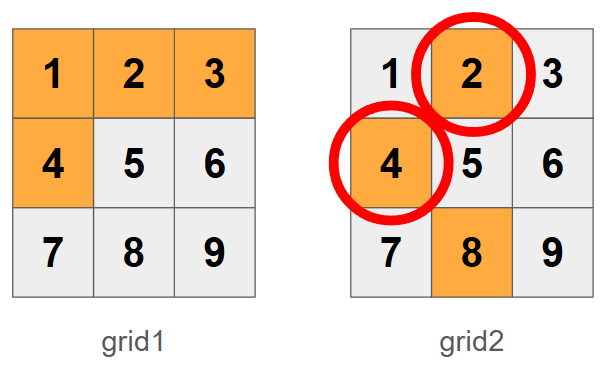
2. 문제 풀이
저는 다음과 같이 접근하여 문제를 해결했습니다.
1. grid1과 grid2에 있는 connected componet들을 전부 찾습니다.
- Depth First Search를 이용해서 connected component를 찾을 수 있습니다.
2. grid2에 있는 connected component 내의 모든 좌표가 grid1의 동일한 connected component에 있는지 하나씩 확인합니다.
- grid2의 좌표에 대해서 grid1의 어떤 connected component에 있는지 쉽게 확인할 수 있도록 1에서 데이터를 준비해둡니다.
3. 2에서 확인한 sub-island의 수를 반환합니다.
+ 코드
부족하지만 저의 풀이도 공유드립니다 ㅎ...
class Solution:
    def countSubIslands(self, grid1: List[List[int]], grid2: List[List[int]]) -> int:
        result = 0

        cc_list_of_grid1, cc_dict_of_grid1 = find_cc_list(grid1)
        cc_list_of_grid2, cc_dict_of_grid2 = find_cc_list(grid2)

        for cc in cc_list_of_grid2:
            grid1_color = -1
            for pos, color in cc.items():
                if pos not in cc_dict_of_grid1:
                    break
                tmp_grid1_color = cc_dict_of_grid1[pos]
                if grid1_color == -1:
                    grid1_color = tmp_grid1_color
                elif grid1_color != tmp_grid1_color:
                    break
            else:
                result += 1
        return result

def find_cc_list(grid: List[List[int]])-> Tuple[List[Dict], Dict[int, Dict[Tuple[int, int], int]]]:
    cc_list = []
    cc_dict = {}
    color = 2
    for row_idx in range(len(grid)):
        for col_idx in range(len(grid[0])):
            if grid[row_idx][col_idx] == 1:
                cc = dfs(grid, row_idx, col_idx, color)
                cc_list.append(cc)
                cc_dict.update(cc)
                color += 1
    return (cc_list, cc_dict)

def dfs(grid: List[List[int]], row_idx: int, col_idx: int, color: int):
    queue = [(row_idx, col_idx)]
    visited = {}
    while len(queue) > 0:
        (row_idx, col_idx) = queue.pop()
        if row_idx > 0 and grid[row_idx-1][col_idx] == 1 and (row_idx-1, col_idx) not in visited:
            visited[(row_idx-1, col_idx)] = -1
            queue.append((row_idx-1, col_idx))
        if row_idx < len(grid) - 1 and grid[row_idx+1][col_idx] == 1 and (row_idx+1, col_idx) not in visited:
            visited[(row_idx+1, col_idx)] = -1
            queue.append((row_idx+1, col_idx))
        if col_idx > 0 and grid[row_idx][col_idx-1] == 1 and (row_idx, col_idx-1) not in visited:
            visited[(row_idx, col_idx-1)] = -1
            queue.append((row_idx, col_idx-1))
        if col_idx < len(grid[0])-1 and grid[row_idx][col_idx+1] == 1 and (row_idx, col_idx+1) not in visited:
            visited[(row_idx, col_idx+1)] = -1
            queue.append((row_idx, col_idx+1))

        visited[(row_idx, col_idx)] = color
        grid[row_idx][col_idx] = color

    return visited
'스터디 > 문제풀이' 카테고리의 다른 글
| [leetcode] 2563. Count the Number of Fair Pairs (3) | 2024.11.15 |
|---|---|
| [leetcode] 3097. Shortest Subarray With OR at Least K II #2 (4) | 2024.11.13 |
| [leetcode] 3097. Shortest Subarray With OR at Least K II (1) | 2024.11.12 |
| [leetcode] 3133. Minimum Array End 풀이 (3) | 2024.11.11 |
| [leetcode] 1905. Count Sub Islands 풀이 #2 (2) | 2024.11.10 |


